The Two Risks Your Orthodontist May Not Have Mentioned
1. Gingivitis severe enough to pause or suspend treatment

Braces create an ideal environment for unhealthy bacterial colonization and accumulation. Brackets and wires trap food, bacteria, and plaque in spaces that are genuinely hard to reach, even with diligent brushing and floss. When that plaque is not removed effectively, the gingival tissue surrounding the teeth becomes inflamed. In moderate cases, a hygienist can manage it with regular cleanings. In severe cases, an orthodontist may have no choice but to pause or suspend treatment entirely until the gum tissue recovers, and in the most serious cases, that means removing the brackets completely, incurring additional costs and time before treatment can resume.
For a child mid-treatment, that means delays, additional appointments, and in some cases a partial reset of progress already made. Damage to the gum tissue due to gingivitis is not easily reversed and can lead to periodontal disease. It is one of the most common, and most preventable, disruptions in orthodontic care.
2. White spot lesions

White spot lesions are areas of permanent enamel demineralization that form when pathogenic bacteria colonize beneath and around orthodontic brackets during treatment. The bacteria produce acids that strip minerals from the tooth surface, leaving dull, chalky white marks that are visible once the brackets are removed.
These lesions are not a cosmetic nuisance. They are permanent structural changes to the enamel. A child can complete two or three years of orthodontic treatment and emerge with straighter teeth that are visibly damaged, a problem that requires additional cosmetic intervention to address.
Research has documented white spot lesion prevalence in orthodontic patients at rates ranging from 23% to over 70%, depending on the study and the oral hygiene protocols in place.1 They are not rare. They are common, and they are preventable with regular brushing twice a day, flossing, cleanings, and the right toothbrush.
Why Standard Brushes Fall Short
A standard mechanical or electric toothbrush, even a high-quality one, does one thing: it moves bristles across surfaces. It cannot reach the bacterial environment that builds up subgingivally, beneath the gum line, or in the tight spaces between brackets and wires where the most damaging bacterial colonies form.
That is the gap the Oralucent Pro Edition was designed to close.

Two Lights. One Brush. Real Science.
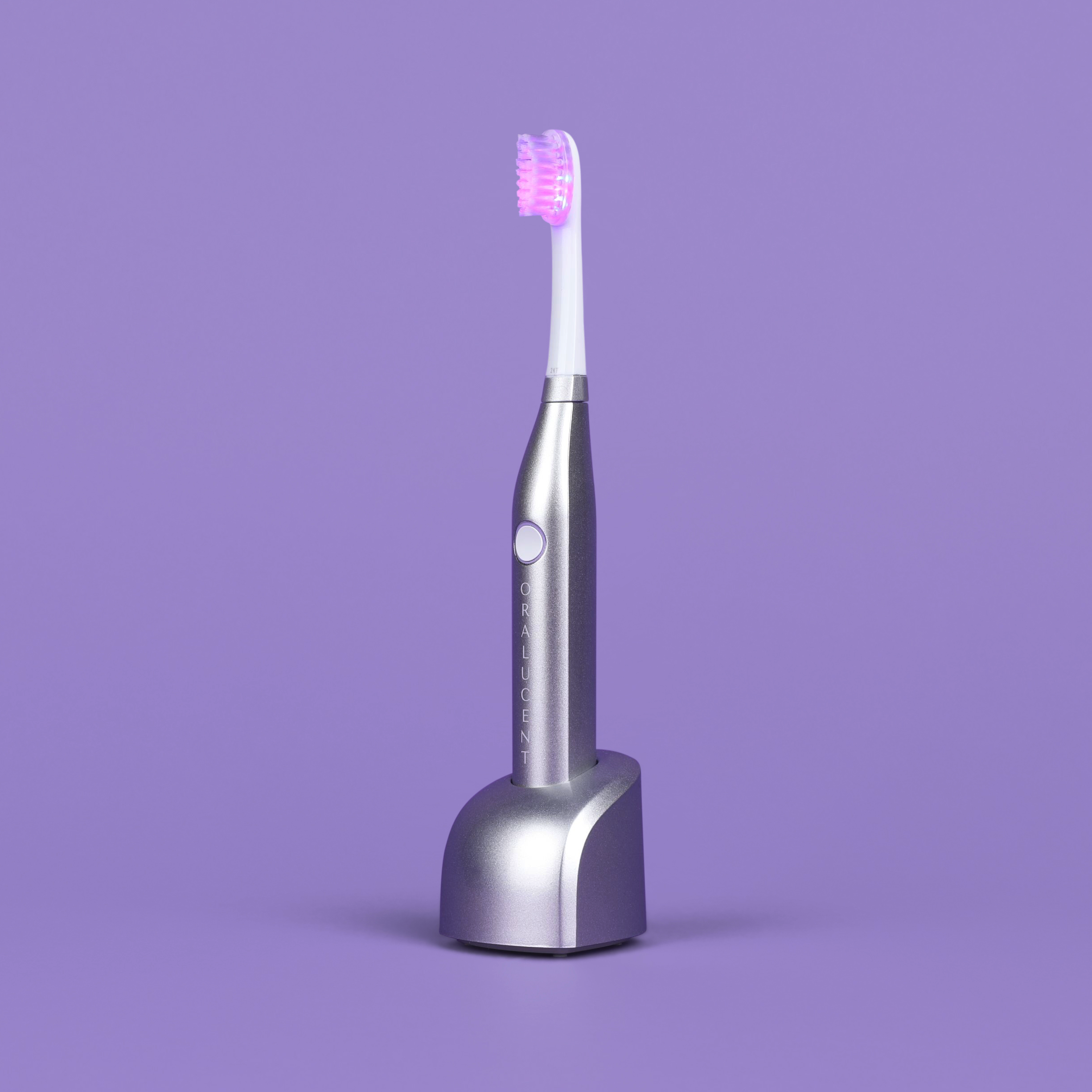
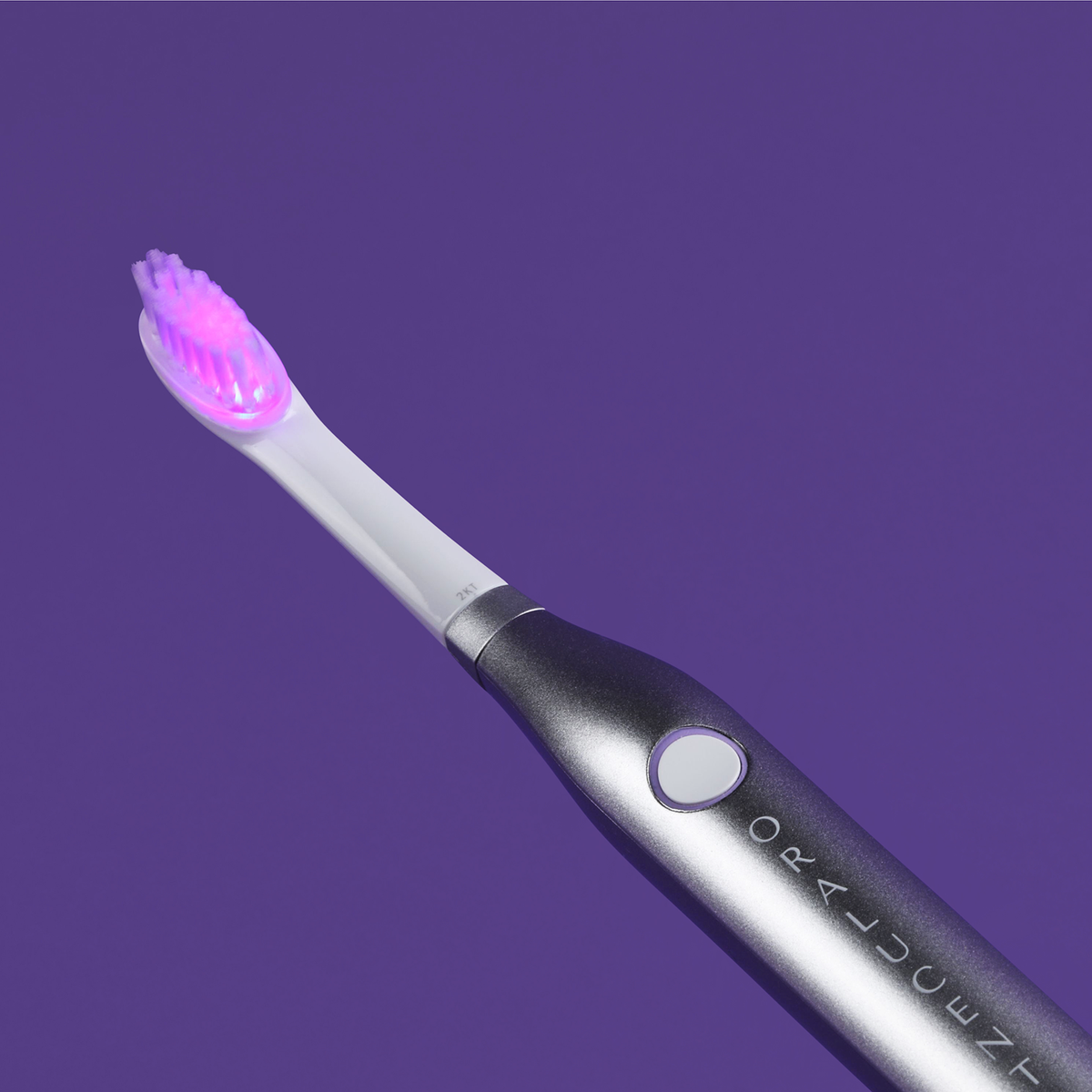
The Oralucent Pro Edition is a premium sonic toothbrush, with a compact brush head (perfect for youth 12 and older), medium-soft bristles, and 40,000 sonic strokes per minute designed to navigate around brackets and wires. But built into the brush head are red and blue LEDs delivering something no legacy mechanical, rotation, or sonic toothbrush can.

Blue light (430nm) targets the harmful bacteria responsible for both gingivitis and white spot lesion formation. It activates natural compounds called porphyrins found inside specific oral pathogens, triggering selective cell death while leaving the beneficial bacteria that belong in a healthy mouth intact. Research by Soukos et al. (2005) demonstrated this mechanism specifically against the dark-pigmented anaerobic bacteria most closely associated with periodontal disease.2 Oralucent's human trial demonstrated an average 81% reduction in HR5 pathogenic bacteria over baseline with normal brushing. The same bacterial reduction that may protect the gum tissue may also reduce the acid-producing colonies responsible for enamel demineralization around brackets.
Red light (660nm) supports the gum tissue itself through photobiomodulation. Research published in the Journal of Dental Research by Tanum et al. (2024) found that red LED pretreatment enhanced the protective function of the cells lining the gums, while reducing inflammation and strengthening the tissue's natural defenses against harmful bacteria.3 For a child whose gums are under chronic bacterial pressure from orthodontic hardware, that tissue support works in the background every single time they brush.
A clinical study published in Photodiagnosis and Photodynamic Therapy (Aljarboa, 2020) examined patients aged 12 to 19 with gingivitis undergoing fixed orthodontic treatment and found that light-based therapies, specifically antimicrobial photodynamic therapy and photobiomodulation, were associated with measurable reductions in key periodontal pathogens and improvements in gingival health parameters across a 6-month follow-up period.4 The study used clinical laser devices rather than a consumer toothbrush, but the underlying science, using light to support gum tissue and reduce harmful bacteria, is the same concept the Pro Edition is built on.
This is clinically supported science working in the background while your kids just brush their teeth.
Built for a Mouth in Braces
Recommended by dentists, orthodontists, and dental hygienists. Built with the same light therapy science used in clinical research and dental offices. Approved for ages 12+.
The Pro Edition's compact brush head navigates easily around brackets and wires, reaching back molars without the bulk of a standard brush head. Medium-soft bristles are gentle enough for sensitive gums and emerging adult teeth. The smart timer signals the ADA-recommended 2-minute mark and auto-shuts off at 4 minutes, so there is no guessing and no cutting corners.
The Pro Edition charges once and runs for 4+ weeks. One less thing to manage during an already demanding treatment period.
And for parents who worry their kid will not actually use it: many teens turn off the bathroom lights specifically to see the light in their mouth. They report it is like throwing a party in their mouth. The teens brush longer and more effectively. When a tool makes the habit easier to keep and fun, that matters.
Protecting the Outcome You Have Both Worked Toward

Two to three years of orthodontic treatment is a significant investment of time, money, and your child's commitment. The brackets come off. What remains should be straight, healthy teeth with intact enamel, not white spot lesions or gum tissue that needed to recover from preventable inflammation.
Effective oral care habits during treatment, consistent 2-minute twice-a-day brushing, daily flossing with a water pick, regular cleanings, and the right daily tool, are what protect that investment every single day between appointments.
All you have to do is swap their toothbrush for an Oralucent Pro Edition, and remind them twice a day to brush for two minutes.
Tip: We have found that playing a 2-minute song they like during brushing also enhances the duration and effectiveness of brushing.

If you are looking for a dentist and orthodontist-recommended electric toothbrush for braces that goes beyond mechanical cleaning, the Pro Edition was designed with exactly this in mind.
The habits your kids build during treatment will follow them long after the brackets come off. Their oral health today will create a foundation for a lifetime. Give them a fun-to-use tool that works as hard as you do to protect the outcome you have both worked toward.
Healthier gums. Intact enamel. A smile worth protecting.
60-Day Smile Guarantee. 1-Year Worry-Free Warranty. Free Shipping.
- Ships Fast & Ships Free: Typically ships within 1 business day with free ground shipping on orders over $169. Expedited shipping is available.
- 60-Day Smile Guarantee: Try it risk-free. If you’re not completely satisfied, return it—no questions asked.
- 1-Year Worry Warranty: Enjoy peace of mind with our full one-year product warranty.
Already reading about oral health for your teenager or college student? See our companion article: The Back-to-School Gift That Protects Their Health All Year →
References
- Lucchese A, Gherlone E. Prevalence of white-spot lesions before and during orthodontic treatment with fixed appliances. European Journal of Orthodontics. 2013;35(5):664-668. https://doi.org/10.1093/ejo/cjs059
- Soukos NS, Som S, Abernethy AD, et al. Phototargeting Oral Black-Pigmented Bacteria. Antimicrobial Agents and Chemotherapy. 2005;49(4):1391-1396. https://doi.org/10.1128/aac.49.4.1391-1396.2005
- Tanum J, Kim HE, Lee SM, Kim A, Korostoff J, Hwang G. Photobiomodulation of Gingival Cells Challenged with Viable Oral Microbes. Journal of Dental Research. 2024;103(7):745-754. https://doi.org/10.1177/00220345241246529
- Aljarboa A. Efficacy of antimicrobial photodynamic and photobiomodulation therapy against Treponema denticola, Fusobacterium nucleatum and human beta defensins-2 levels in patients with gingivitis undergoing fixed orthodontic treatment: A clinic-laboratory study. Photodiagnosis and Photodynamic Therapy. 2020. https://doi.org/10.1016/j.pdpdt.2020.101659